Bush Hill Park

Course Manager's Blog: Why the Course Remains Closed During Frost, Thaw and Heavy Rain, 8th January 2026

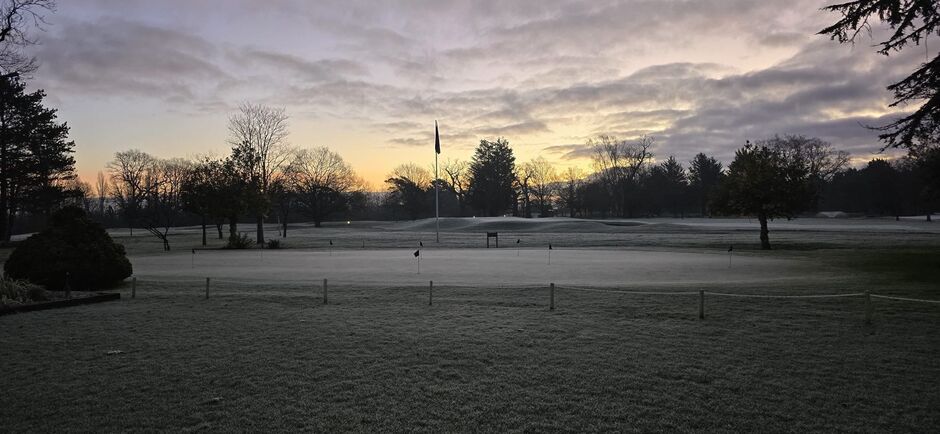
Over the winter months, periods of frost followed by milder, wetter weather can create some of the most challenging conditions for managing the golf course. While it may appear that the frost has “gone” from the surface, what is happening below ground is far more important.
After prolonged frost, the ground beneath the turf can remain frozen even when air temperatures rise. When this frozen ground begins to thaw, it does so from the surface downwards. This creates a situation where the top layer of turf becomes soft and unstable, while the soil beneath remains solid and frozen.
At this stage, the grass roots are particularly vulnerable. Any foot or trolley traffic can cause root shear, where the grass plant is effectively torn away from its roots. Once this happens, the turf cannot recover until spring growth resumes, leaving long-term damage that affects playing quality well beyond the winter months.
The situation is made significantly worse when thawing conditions are accompanied by rainfall. Because the lower soil profile is still frozen, water cannot drain away as it normally would. Instead, it sits on the surface, further softening the upper layer and increasing the risk of turf movement, smearing and surface damage. In heavier rain, this can also lead to surface water and flooding.
Although the course may look playable, allowing play during this phase would result in damage that could take months to repair. Shaded areas and heavier soils are especially slow to recover and are often the first to suffer lasting harm.
Our priority during these periods is to protect the long-term health of the course, ensuring good playing conditions not just for the next few days, but for the season ahead. Closing the course during frost, thaw and heavy rainfall is never taken lightly, but it is sometimes the only way to prevent avoidable and lasting damage.
We appreciate your patience and understanding during these challenging winter conditions and will always aim to reopen the course as soon as it is safe and sustainable to do so.
Leigh Hyde
Course manager
Created by intelligentgolf version 10.1.2.